

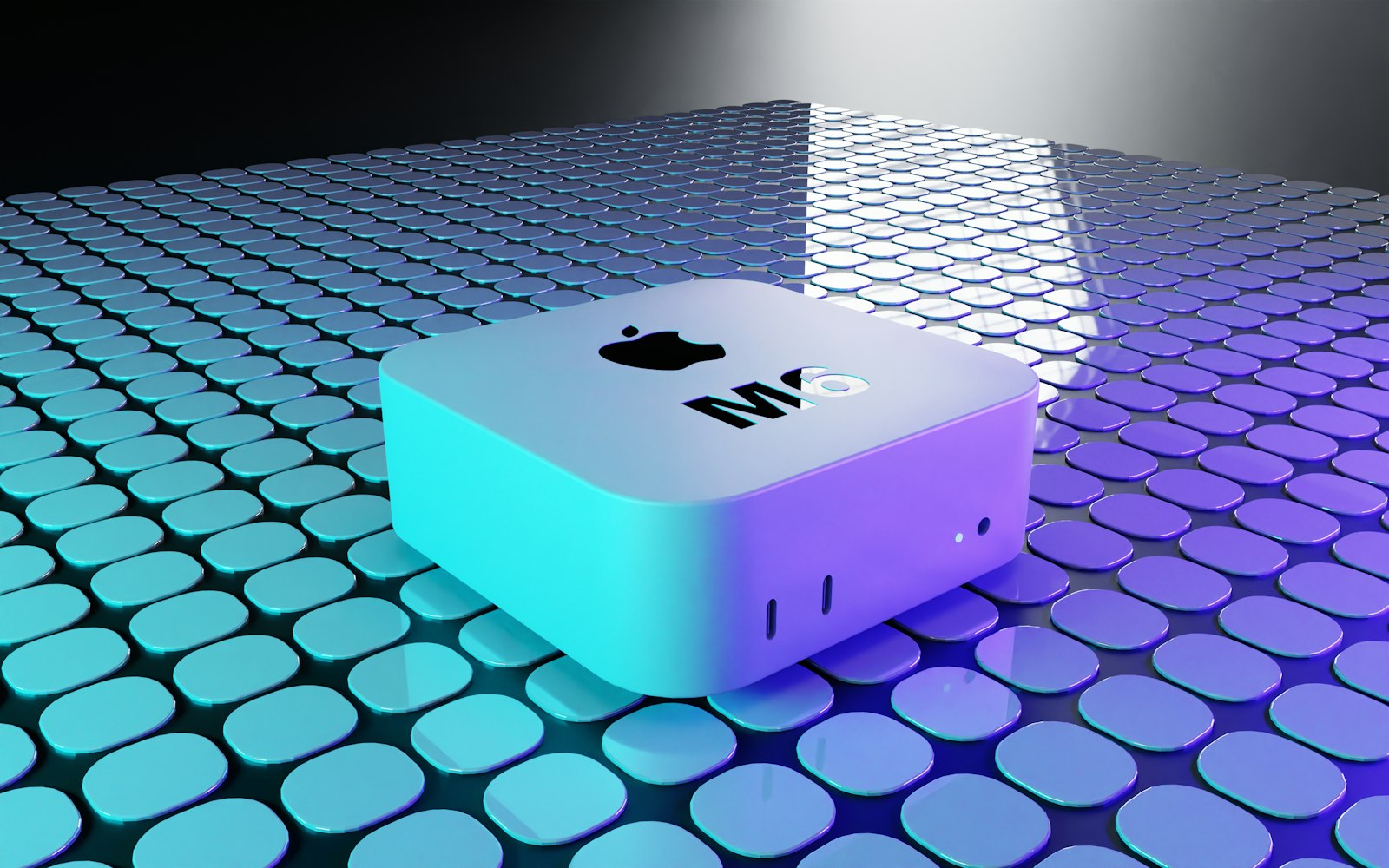
Over the past few months, OpenAI has bought tens of thousands of Mac minis and Mac Studios. That is according to the US trade publication The Information, citing a person with direct knowledge of the matter. The machines do not sit in offices. They run inside the company’s infrastructure and serve a single purpose: training computer-use agents, meaning AI systems that operate a computer on their own. Reaching for Apple’s consumer hardware looks odd at first, but it follows a sober technical logic.
Key takeaways
- According to The Information, OpenAI has acquired tens of thousands of Mac minis and Mac Studios to train agents for autonomous computer use.
- The advantage of Apple’s chips is the shared memory between the processor and the graphics unit, which fits this particular style of training better than a conventional graphics card.
- Anthropic pursues the same approach but rents Mac capacity through Amazon’s AWS cloud rather than buying hardware.
- The Mac models with large amounts of memory have been sold out for months because of a memory chip shortage.
- Apple’s Mac revenue rose 29 percent to 10.4 billion dollars in the June 2026 quarter, a record for that quarter.
Why Mac machines of all things?
Training computer-use agents works differently from the classic pre-training of large language models. In what is called reinforcement learning, the model tries an action, observes the result on screen, and receives feedback on whether it moved closer to the goal. This loop repeats millions of times, each pass inside a real, running operating system. The machine constantly switches back and forth between the AI model and the software being operated. That workload is memory-hungry but relatively light on parallel computation.
This is exactly where Apple’s chip architecture shows its strength. Unlike typical servers, which keep system memory and graphics memory strictly separate, the processor and the graphics unit on Apple silicon chips draw from the same memory pool. That avoids the costly copying of data between two separate memory regions. For the switching workload described above, this design is more efficient than a dedicated graphics card built for massive parallel computation, whose strength goes unused here. The Mac mini and Mac Studio also offer active cooling that holds up under sustained load for hours, and as finished devices they are comparatively cheap to obtain.
One point matters for context: the Macs do not replace the large Nvidia clusters on which the models are trained from the ground up. They handle one defined, specialized step in the training chain. For compute-heavy pre-training, specialized AI hardware remains the standard.
Buy or rent: OpenAI and Anthropic take separate paths
OpenAI buys the devices outright and runs them without a display or keyboard as pure compute nodes in its own infrastructure. Anthropic arrives at the same technical result by a different route and rents Mac capacity from Amazon’s cloud division, AWS. How many devices run there for Anthropic is not known. Both paths carry a cost. Buying ties up capital and carries the risk of hardware going obsolete, but the machines are secure and exclusive. Renting stays flexible but pays the cloud provider’s markup.
A small ecosystem has grown up around the approach. The open-source software Exo links several Macs into a cluster so they compute on a task together. Peter Voell, formerly on OpenAI’s infrastructure team, is building Mount Thor, a cloud service that runs exclusively on Apple hardware. Demand is evidently large enough for specialized providers to be worthwhile.
What the purchase reveals about the AI infrastructure market
The move lands in a strained market. The Mac models with especially large memory have been sold out for months, according to The Information, because memory chips are scarce worldwide and the AI industry is driving memory prices up. Apple announced new models earlier than usual, which points to unexpected demand from the industry. In the June 2026 quarter, Apple’s Mac revenue rose 29 percent to 10.4 billion dollars, the highest figure ever recorded for that quarter.
Nvidia counters with an offering of its own. The DGX Spark, a compact AI machine for the desk, deliberately relies on dedicated graphics performance with Nvidia’s own compute cores rather than shared memory. For developers who want to train or test smaller models locally, two opposing design philosophies now face off. The fact that the large labs are extending their search for compute capacity even into orbit shows how wide the field has become.
The bigger picture
Buying tens of thousands of Mac minis is not a marketing stunt but a cost calculation. When a defined training step runs more cheaply and with less effort on consumer hardware than on data center graphics cards, it moves there. For Apple, the effect is a welcome side income without the company having to enter the AI model business itself. And for anyone planning AI infrastructure, the lesson is this: the question is no longer only how many graphics cards you need, but which type of machine fits which step of the work. The answer is becoming more differentiated.