

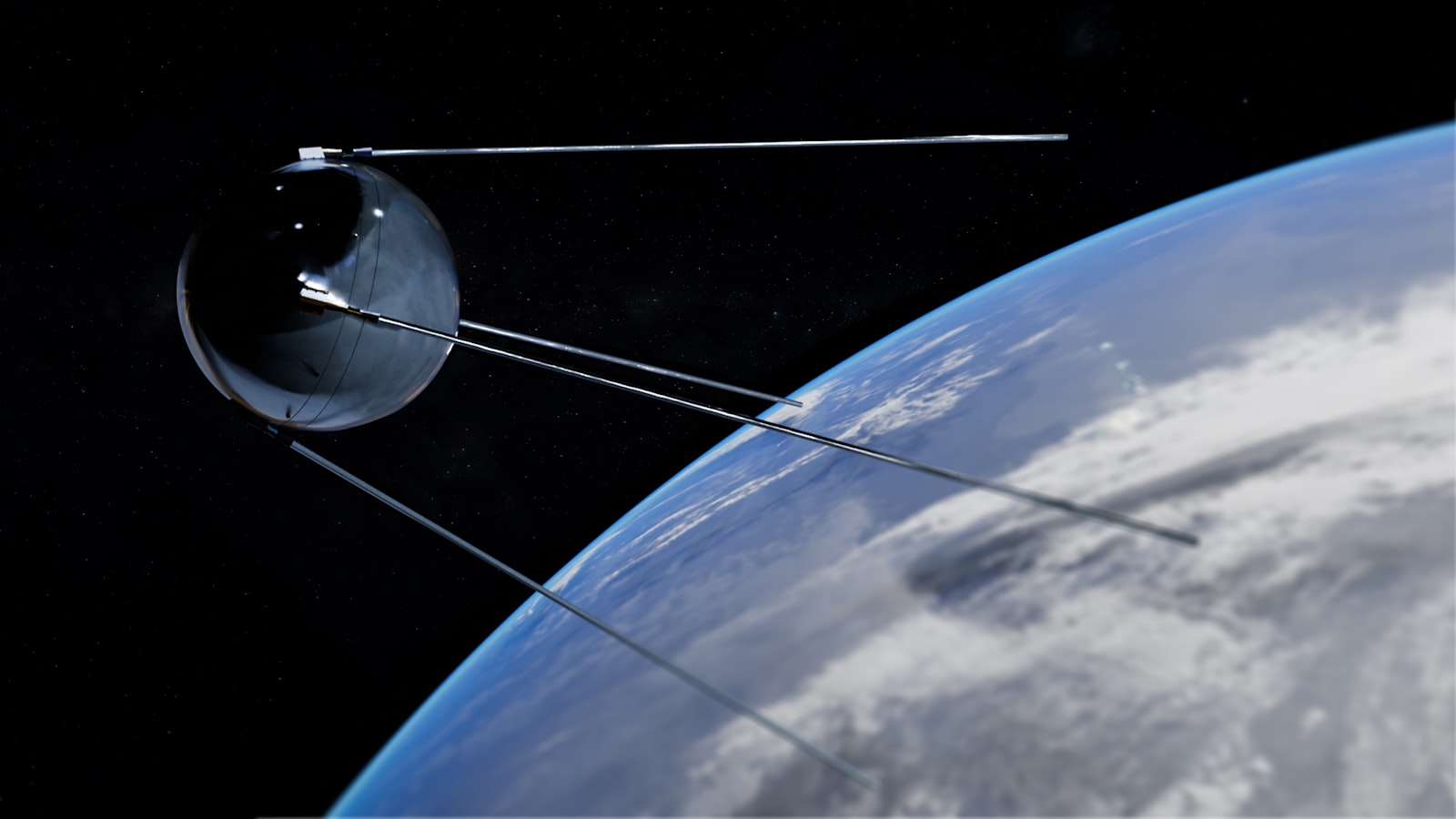
On August 4, 2026, SpaceX and Nvidia announced that they would jointly develop the computing hardware for a satellite called Starmind AI1. Three weeks later, SpaceXAI, the company’s AI division, added details: a full Nvidia data center is meant to operate in a sun-synchronous orbit, powered by solar arrays and cooled by radiating heat into the vacuum. Over the long run, there is talk of a constellation of up to one million satellites forming a distributed AI supercomputer. The first dedicated launch attempt is planned for late 2027. The rest, so far, is concept.
Key takeaways
- SpaceXAI and Nvidia are developing Starmind AI1, a satellite built around an Nvidia Vera Rubin NVL72 compute rack, meaning 72 Rubin GPUs and 36 Vera CPUs in one rack.
- The system is meant to draw about 120 kilowatts of compute power, supplied by solar cells rated at roughly 150 kilowatts peak; a 110-square-meter surface radiates the waste heat straight into space. Earlier reports cited higher figures, and the numbers are still moving.
- The advantage in orbit: no cooling towers, no land, no grid connection. Nvidia puts the reduction in cooling overhead at an order of magnitude.
- The plan is to run inference, meaning the execution of finished models, not training. Results are to be beamed to Earth over laser links via Starlink.
- Initial compute modules are to be tested on Starlink satellites, followed by a prototype in early 2027 and the first dedicated Starmind launch in late 2027. OpenAI CEO Sam Altman has called such plans “ridiculous.”
A data center that skips the cooling towers in a vacuum
The basic idea is easy to state: on Earth, AI data centers compete for building land, grid connections, and water for cooling, and all of that is becoming scarce and expensive. In orbit there is none of that, but there is uninterrupted sunlight. SpaceXAI plans to put the satellites in a sun-synchronous orbit where, according to industry figures, they are lit by the sun about 98 percent of the time. Power comes from a solar wing roughly 70 meters across, the servers are water-cooled, and the waste heat radiates into the vacuum through a large radiator surface. Cooling towers and chillers, which account for a substantial share of energy use on Earth, are eliminated.
The compute core is the same hardware Nvidia sells for terrestrial data centers: the Vera Rubin NVL72 rack system, which couples 72 GPUs and 36 CPUs over a fast internal fabric. Nvidia markets a space-adapted module under the name Space-1 and cites up to 25 times the AI compute performance of an older H100 chip. The appeal for Nvidia lies in uniformity: a single hardware and software stack for the Grok chatbot, for the data centers on the ground, and for those in orbit. That specialized accelerators can make operation cheaper is also visible on Earth, for instance when OpenAI switched to Cerebras chips for code generation.
Why it’s about inference, not training
What is striking is what Starmind is explicitly not supposed to do: train large models. The reason is a technical bottleneck called all-reduce. During training, thousands of chips have to exchange and combine huge intermediate results after every computation step. Across a distributed fleet of satellites connected by radio and laser, that exchange takes too long. This is exactly the criticism that Masayoshi Son of SoftBank and Sam Altman of OpenAI have raised publicly. SpaceXAI sidesteps it by having the satellites only run finished models, chiefly for the increasingly autonomous Grok agents. For such tasks, the running cost per request matters more than training performance, a pattern showing up everywhere right now, for example in OpenAI’s own inference chip. The models’ answers would then reach Earth over laser links and the existing Starlink network.
The open questions: radiation, maintenance, launch cost
The skepticism among experts is aimed less at the idea than at whether it can be built. First, radiation: cosmic and solar particles can flip individual bits in modern chips, and the smaller the transistors, the less charge separates a zero from a one. Computer scientist Benjamin Lee points out that the error correction this requires noticeably slows down computation in orbit. Second, maintenance: a failed satellite cannot be repaired, only replaced. For context, Meta reported a hardware failure roughly every three hours during one large training run on the ground.
Third, launch cost. Putting one kilogram into orbit currently costs about $1,500 on the Falcon Heavy; for a data center in space to pay off, industry estimates say it would need to be $50 to $100. The AI1 satellite is too heavy for the Falcon 9 and therefore depends on the Starship rocket, which is not yet in regular service. On top of that come the familiar worries about growing space debris in low orbit and about reflections that obstruct astronomers’ view. Sam Altman summed up his stance on orbital data centers in one word: “ridiculous.”
Outlook: a test flight decides more than a press release
SpaceXAI is proceeding in steps. First, individual compute modules are to ride along on ordinary Starlink satellites, then a full prototype in early 2027; the first dedicated Starmind launch is set for late 2027, according to SpaceXAI president Gwynne Shotwell. The satellites are to be built in a purpose-built factory in Bastrop, Texas. Until then, Starmind remains a design whose key figures still shift from report to report. Whether the concept turns into a working data center will show not in the announcement but in the first satellite that radiates heat, withstands radiation, and still computes reliably. And Musk’s timelines, long a term of their own on Wall Street, rarely arrive on schedule.
Sources
- heise online: Auf dem Weg zu KI-Rechenzentren im All: SpaceXAI zeigt "Starmind"
- Engadget: SpaceX to use NVIDIA GPUs for its Starmind project
- Interesting Engineering: Nvidia to build Starmind AI1 satellite compute payload for SpaceX
- Electronics Weekly: Nvidia and SpaceXAI adapting terrestrial datacentre infrastructure for space