

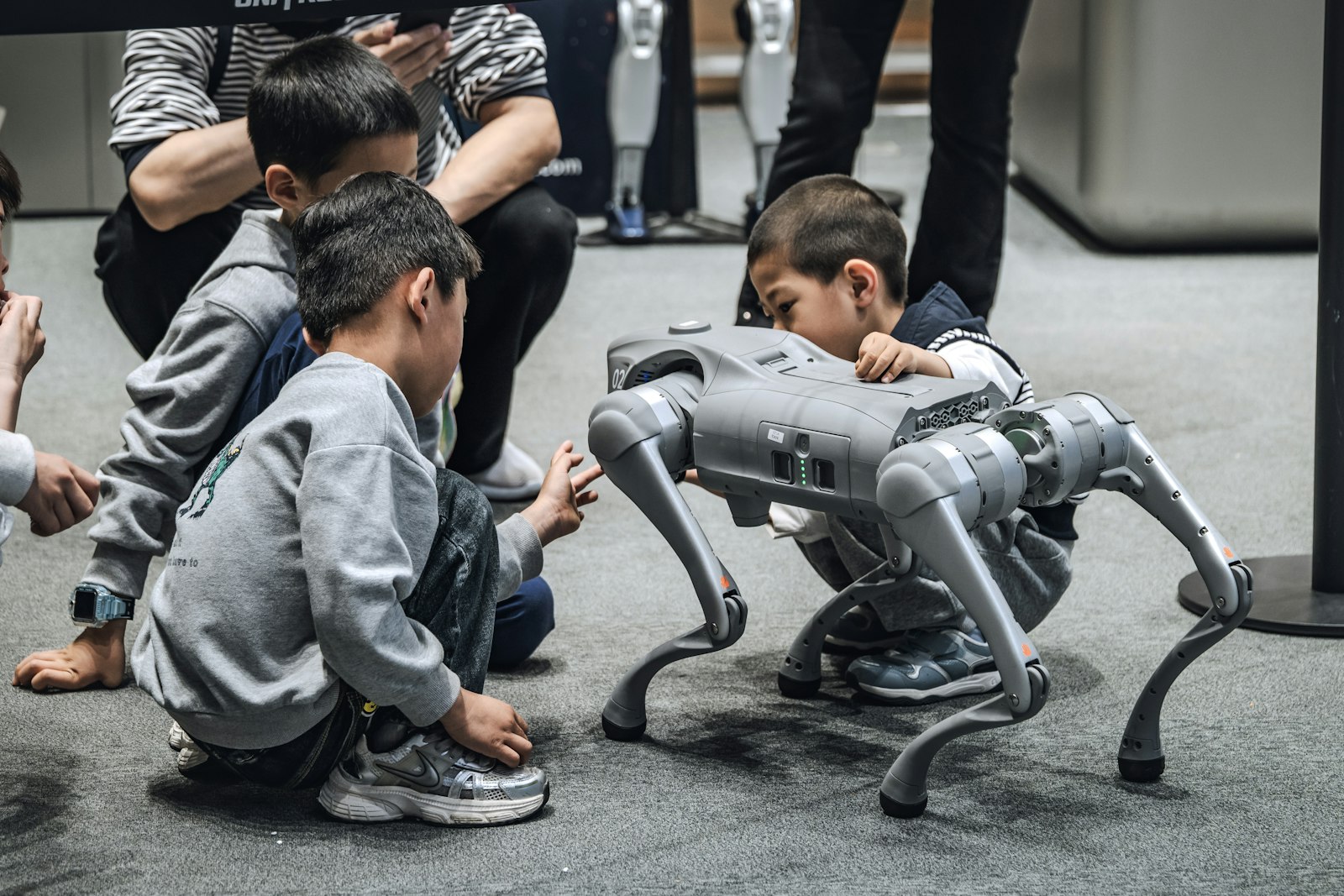
When Unitree Robotics shares began trading in Shanghai on August 19, the stock briefly spiked 629 percent and still closed 460 percent above its offer price. The Hangzhou-based maker of humanoid robots and robot dogs raised roughly 6.1 billion yuan (about $900 million) and hit a valuation of around $50 billion. What looks like proof of a mature, profitable robotics industry turns out, on closer inspection, to be a business model that leans heavily on state-backed demand that finances itself.
Key takeaways
- Unitree raised about 6.1 billion yuan on Shanghai’s STAR Market, with shares closing 460 percent above the IPO price.
- The valuation sits around $50 billion, with some calculations reaching as high as $66 billion.
- Nearly three-quarters of humanoid robot revenue in the first nine months of 2025 came from education and research, not commercial deployment.
- More than 90 state-backed training centers buy robots and sell the movement data they collect back to manufacturers like Unitree, with data for a five-minute robot dance costing up to $148,000.
- HSBC analysts warn the current surge in robot shipments could be “illusionary” and unlikely to hold up without real gains in the AI models that control the robots.
A business model that feeds itself
The pattern analysts now describe as China’s circular AI economy works in three steps. Local governments and state-backed institutions fund training centers for humanoid robots. Those centers buy machines from manufacturers like Unitree at scale, officially for research and training purposes. The robots generate movement and sensor data during test operations, which centers then sell back to the very manufacturers that built them. One industry analyst told the Financial Times the result blurs the line between independent market demand and demand manufactured within a politically supported ecosystem.
For Unitree, this ecosystem is business-critical. In the first nine months of 2025, nearly three-quarters of humanoid robot revenue came from education and research rather than the open market. By June 2026, the industry counted more than 90 such training centers in China. One figure illustrates how lucrative the data business can get: training data for a five-minute robot dance can cost up to one million yuan, roughly $148,000.
What the IPO numbers actually show
The listing itself was a spectacular success by conventional financial metrics. Subscriptions were oversubscribed more than 8,000 times, and the share price briefly tripled on its first trading day. Yet Unitree’s current revenue multiple sits at roughly 35.89 times annual sales, while comparable competitors typically trade around 20 times. That gap fuels doubts over whether the market is pricing in real business or mostly the promise of future profits, a pattern not unusual for IPOs in emerging industries, but unusually pronounced here.
The quality of the expensively purchased training data is also questioned internally. A manager at one training center said that of eight hours of collected training time, often only two to three hours were actually usable. A significant share of the money flowing through the state-backed loop appears to generate data of questionable value for the robots’ actual AI development.
Analysts push back
HSBC struck an unusually blunt tone on the whole sector in a mid-July report. The surge in robot shipments could be “illusionary,” the bank’s analysts wrote, and without a significant improvement in the AI models that control the robots, the current demand upcycle is unlikely to hold up over the next one to two years. That assessment gets at the heart of the problem: today’s demand is driven less by robots doing genuinely useful work in the real world than by an education and research sector equipped with purchasing power through state subsidy programs.
What it means
For Unitree itself, little changes in the short term. The company is considered profitable, and the fresh billions from the IPO buy room for research into exactly the AI capabilities HSBC says are missing. But for investors, and for how to read China’s robotics boom overall, the story is a warning. When a large share of reported demand comes from a loop where the same few players sit at both ends, record revenue says little about whether humanoid robots are actually ready for broad commercial use. Similar worries about circular financing structures already shape the debate over whether the entire AI industry is sitting in a valuation bubble, except that in Unitree’s case the state itself is acting as the demand engine. Whether that turns into a durable industry or an expensive political prestige project will only become clear once training centers eventually have to buy robots that can actually do something, not just because a subsidy program requires it.