

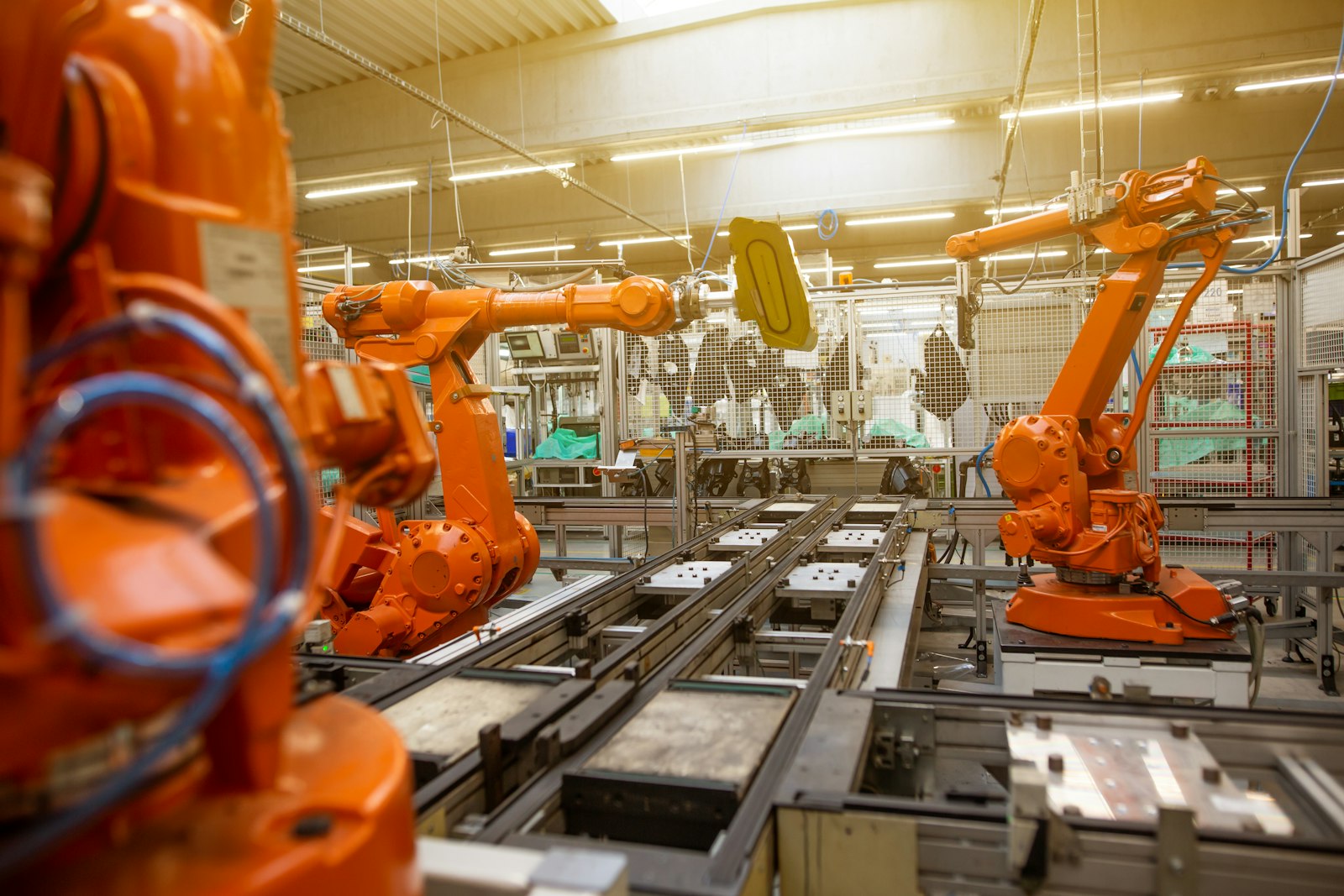
A robot that picks up a cup in a lab is not automatically ready for a factory floor or a kitchen. Light changes, objects are slightly misplaced, a cable lies in the way, and grips slip. World Labs wants to narrow that gap between an impressive demonstration and reliable operation with a simulation platform. The company founded by AI researcher Fei-Fei Li describes a method that turns one recorded real-world task into many controllable virtual variations. Robots are meant to learn and be tested there before expensive hardware repeats the same trial again and again.
The basic idea is not new. Simulation has been part of robotics for years. The more ambitious claim is to bind a virtual scene closely enough to a specific real task, then quickly create many plausible deviations from it. World Labs calls the process real-to-sim-to-real, or R2S2R. Its newly published results are an interesting signal for the field. They do not yet prove that humanoids or mobile robots can suddenly work everywhere without extensive real-world testing.
Key takeaways
- World Labs wants to recreate a real robot task as an interactive simulation and generate thousands of variations from it.
- The system is intended to vary object positions, clutter, camera views, lighting, robot state, and physical parameters.
- The company reports complex manipulation tasks without additional real-hardware training and one-hour runs on five robot platforms.
- Those results come from the company itself; independent replication and evidence from unknown environments are still missing.
- The near-term value is faster testing and earlier failure discovery, not a free pass for robots outside prepared scenes.
One task becomes many worlds
For new robot tasks, collecting data is often the real bottleneck. A team has to set up the machine, repeat a task, capture failures, and test again after every change. That costs more than time. With robot arms, mobile platforms, or humanoids, a failed attempt can also damage equipment or interrupt people at work. Simulation is attractive because it can run the same process repeatedly, faster, and without wear.
World Labs does not want to begin with a generic virtual factory. According to the company, its R2S2R engine first reconstructs a specific real task with the observations and movements that matter for it. It then systematically varies object layouts, backgrounds, distracting items, camera perspective, robot state, and elements of physics. One demonstration becomes a collection of training and test scenes. The principle resembles data augmentation for image models: instead of gathering endlessly more real recordings, change known cases so the system does not merely memorize one perfect starting condition.
The goal is generalization. A robot should not only know how to grasp one particular box at one precise spot. It should recognize what matters when the box has been rotated, another object is beside it, or the scene is viewed from a slightly different angle. That could be especially valuable in industry, where changeovers and product variants often require new measurement runs, safety checks, and manual adjustments.
The decisive question is sim-to-real
There is still the classic sim-to-real problem between an attractive simulation and real reliability. A virtual world can look convincing while getting friction, deformation, latency, or sensor noise wrong. For a robot arm, it matters whether packaging gives a little, plastic film reflects light, or a gripper closes one millimeter off center. Small details decide whether a movement looks graceful or ends with the object on the floor.
World Labs says its models can use simulation to predict and evaluate which control policies will work on real hardware. It also says trained policies ran for one hour without human intervention on five platforms. That is a concrete claim that can be tested, and it is more meaningful than a rendered video. Caution is still warranted: the described scenes were captured and calibrated in advance. The harder question is how well a system continues to work in an unfamiliar facility, with new objects, or after an unexpected disruption.
That limitation is central, not a footnote. The large real-world datasets used in robotics show how much variety current models still need. Research on world models is also still separating image generation, planning, and simulations that can hold up under physical constraints. A system that can render a scene convincingly does not necessarily understand every force and consequence inside it.
Why the method still matters
If the match between simulation and reality is good enough, R2S2R moves an expensive part of development to a less expensive place. Teams could first test new policies virtually against many edge cases, then use real hardware only for the most promising variants. Failures would surface earlier. That could shorten development cycles and reduce the risk that a robot fails on a small deviation only after it reaches a customer site.
The approach fits a larger shift in robotics. Language models could learn from enormous stores of existing text. The physical world offers no equally convenient dataset with movements, forces, and outcomes cleanly matched together. That is why companies are investing in teleoperation, video capture, digital twins, and synthetic data. World Labs is betting that capable spatial models can partly close that data gap. Its July acquisition of simulation specialist SceniX suggests that the company is aiming not only at 3D content, but at training infrastructure for machines.
For users, this is mainly a sign of maturity, not an immediate buying signal. The technology is likely to make sense first where workflows repeat and scenes can be captured in a controlled way: logistics, manufacturing, laboratories, or individual service tasks. A general-purpose household robot, by contrast, has to live with a far larger mess that is difficult to model completely.
The next test must happen outside the model
With R2S2R, World Labs offers a plausible way to give robots more experience without collecting every experience expensively in the real world. The published results deserve attention because they do not reduce the problem to better language commands. They focus on the quality of the world in which a robot practices. The most important benchmark remains simple: does the learned movement still work safely when the real world was not arranged for the demo?
That is what the next independent tests need to answer. Open comparison data, failure rates in new scenes, and longer runs under changing conditions would matter most. Until then, simulation is not a substitute for reality. It may still ensure that robots have their first thousand bad ideas somewhere they cannot slow anyone down.