

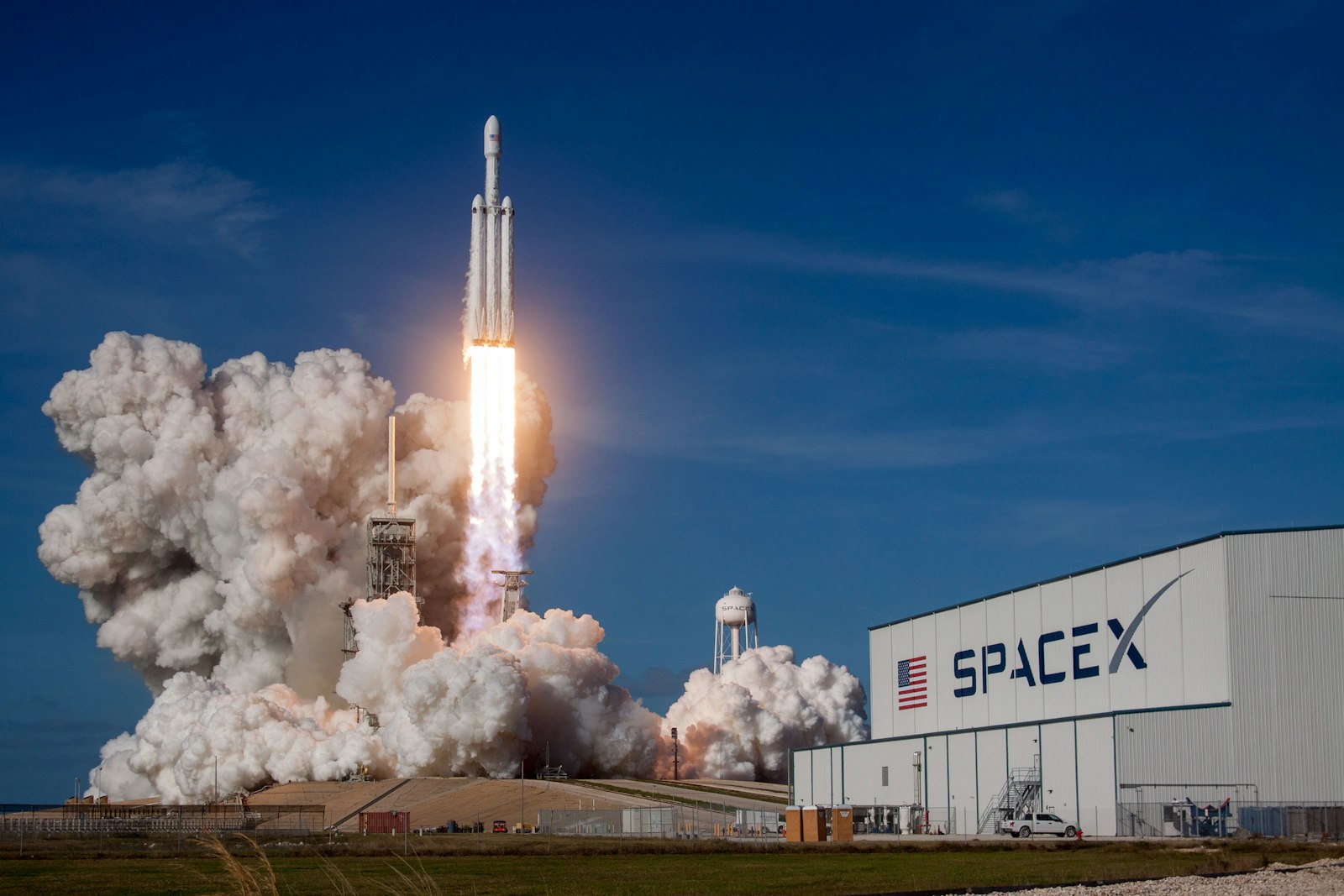
In mid-August 2026, SpaceX completed its $60 billion acquisition of AI coding tool Cursor, paid entirely in stock, the largest acquisition of a venture-backed startup in history. Just days later, Bloomberg reported that Elon Musk’s rocket company had also approached rival Cognition, the maker of the coding agent Devin. Cognition CEO Scott Wu publicly denied the report on X: his company was not for sale, and the two firms had not even been in talks.
Key takeaways
- SpaceX completed its $60 billion, all-stock acquisition of Cursor on August 14, 2026, the largest venture-backed acquisition ever.
- Just five days later, Bloomberg reported acquisition talks with rival Cognition (Devin) at a possible valuation of $40 billion.
- Cognition CEO Scott Wu publicly denied the report, saying the company was not for sale and had not been in talks.
- Cursor brings over 50,000 enterprise customers, including 64 percent of the Fortune 500, and Morgan Stanley projects annual revenue growing to $33 billion by 2030.
- For German Cursor users, it remains unclear when the newest model, Grok 4.5/4.6, will become available in the EU; access has been delayed without a stated reason since July 2026.
The $60 billion deal: how SpaceX became an AI-coding company
After acquiring xAI in February 2026, SpaceX renamed its AI division SpaceXAI, went public in June 2026, and afterward reached a market capitalization of nearly $2.3 trillion. The Cursor deal had been structured as an option back in April 2026: SpaceX could choose between a roughly $10 billion partnership or an outright $60 billion acquisition, and chose the latter. Cursor itself reached about $2.6 billion in annualized revenue by mid-2026, driven by a growing base of enterprise subscriptions with more than 50,000 organizations as customers. For SpaceX, this fits neatly into a vertical strategy: Grok models inherited from xAI, now a coding tool with a massive developer base, plus its own Colossus compute clusters. This kind of consolidation is currently an industry-wide pattern, as kabel-salat.info already noted around AMD’s acquisition of chip startup Taalas: whoever controls the full chain from model to tool to hardware becomes independent of outside vendors.
The Cognition approach and the public denial
Five days after the Cursor deal closed, Bloomberg reported, citing people familiar with the matter, that SpaceX had also approached Cognition. Cognition builds the coding agent Devin and counts Mercedes-Benz, Citi, and Goldman Sachs among its clients; in 2025 it had already acquired the remaining assets of rival Windsurf after Google DeepMind poached that company’s leadership in a $2.4 billion deal. Cognition itself raised $1 billion in May 2026 at a $25 billion valuation, and Bloomberg reported early talks about a new funding round at $40 billion. According to Bloomberg, the acquisition talks with SpaceX are no longer active, and CEO Scott Wu publicly disputed that any talks had taken place at all. The two companies apparently continue discussing a possible collaboration, however, such as Cognition using SpaceX compute capacity, suggesting the rejection was aimed at the specific acquisition rather than at cooperation as such.
What it means for German developers
Cursor is among the most widely used AI coding assistants among German developer teams too, and with the acquisition, control over both the tool and the model now sits with a single US company. That already shows up in practice with the newest model: Grok 4.5, since superseded by Grok 4.6, has been unavailable in all 27 EU states, including Germany, since July 8, 2026, with SpaceXAI giving no stated reason, neither the EU AI Act nor data protection is explicitly cited. For companies using Cursor in production, that raises open questions around data transfer and contract compliance under GDPR, especially since SpaceXAI has not announced any European infrastructure of its own. Providers like Mistral and DeepSeek benefit in the meantime from their advantage of offering local, or at least more straightforwardly EU-compliant, alternatives.
Outlook
The Cursor acquisition shows just how fast the AI industry is being rearranged: a rocket and satellite company has assembled a full software stack for software development within a few months. Whether Cognition eventually gets acquired after all, or stays independent through its own funding round, remains open; the continuing talks about collaboration suggest SpaceX has not shelved the idea entirely. For German developer teams, the acquisition strategy itself matters less right now than the unresolved EU availability of the newest model and the compliance questions that should be cleared up before relying on it in production.