

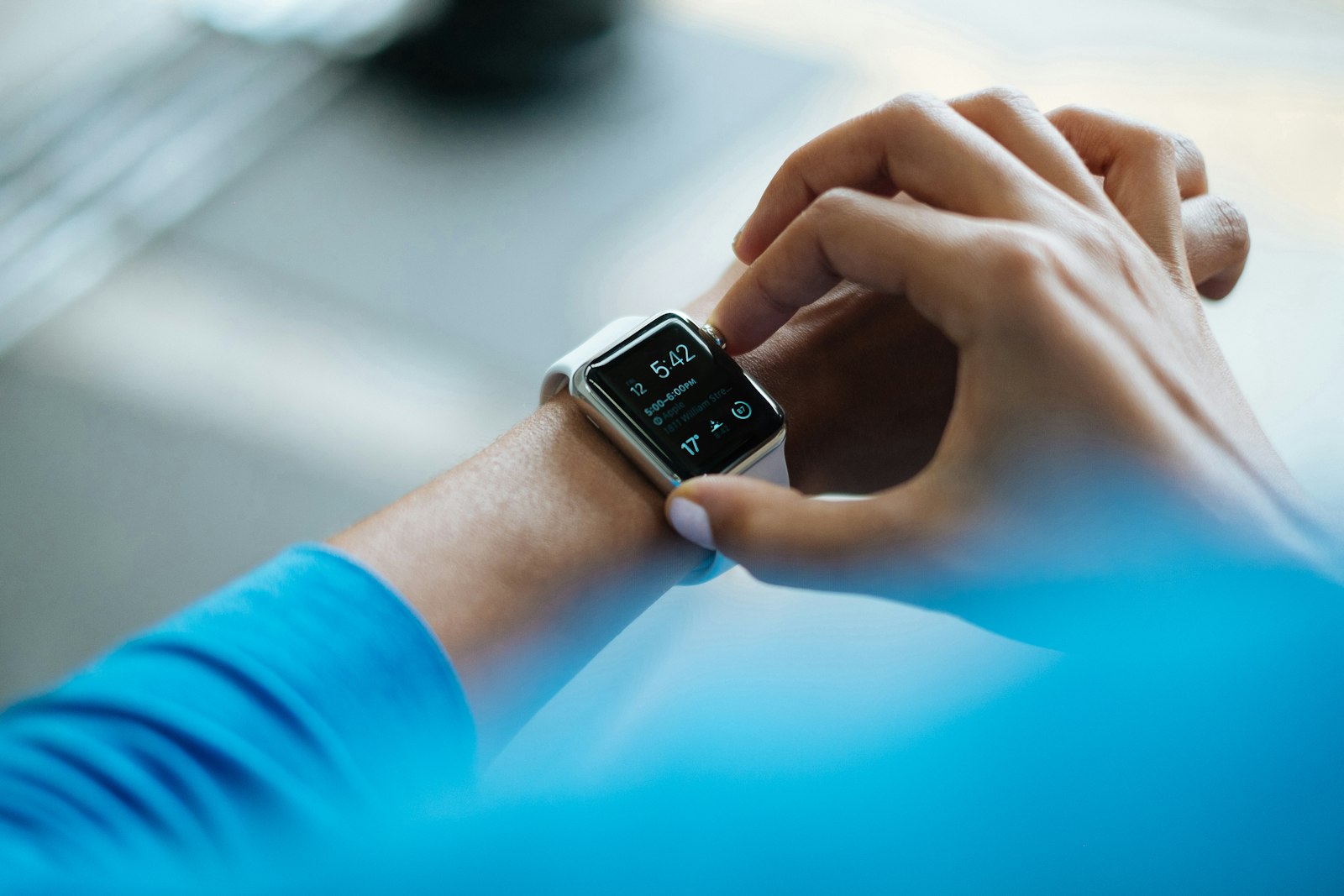
Last week, Google began enabling a feature on Pixel Watches that Google calls a first of its kind: the watch uses pulse and motion data to estimate whether insulin resistance, the most common precursor to type 2 diabetes, may be developing. It also adds cuffless blood pressure trends and an analysis of breathing during sleep. The first monthly reports arrive in early October. An AI model pretrained on data from millions of wearers makes this possible. How well it works can be stated with unusual precision, because Google published the underlying study in Nature.
Key takeaways
- The Health Guardian features for insulin resistance, blood pressure and sleep breathing are free on the Pixel Watch 3, 4 and 5; the Fitbit Air gets insulin and blood pressure trends later this year, but only with a Google Health Premium subscription.
- The watch measures neither blood sugar nor blood pressure. It analyzes pulse and movement over several weeks and delivers a trend report on the first of each month.
- In Google’s Nature study of 1,165 participants, the model identified 60 percent of people with insulin resistance from watch data plus basic details such as age and weight; with blood test results, it identified 76 percent.
- Breathing emergency detection for the Pixel Watch 4 and 5 carries the EU’s CE marking and launches in select European countries, including Germany, Austria and Switzerland according to heise.
- Google classifies all trend features as general wellness tools, explicitly not as screening for diabetes, hypertension or sleep apnea.
What the watch measures and what it only estimates
Health Guardian is a new section of the Google Health app, formerly the Fitbit app. Google announced the features on August 12, and they have been available to set up since September 24. The package has four parts: insulin resistance trends, blood pressure trends, sleep breathing quality and breathing emergency detection.
The key word is trend. Insulin resistance means that muscle, liver and fat tissue respond less well to insulin, so the body has to release more and more of it to keep blood sugar in check. Normally a doctor diagnoses it with blood tests. The Pixel Watch draws no blood. It analyzes pulse and movement data over several weeks and derives an estimate from them. It needs data from at least seven days a month. Blood pressure works in a similar way: according to Google, the watch observes pulse and motion patterns throughout the month, which requires wearing it for at least five consecutive days in a week. There is no reading in mmHg, only the direction of travel.
Both features rely on so-called foundation models, large AI models that first learn in general terms and are then refined for a specific task. Google says the insulin model was pretrained on more than one trillion minutes of data from five million users who opted in. For blood pressure, Google uses a model called WavesFM, trained on billions of minutes of raw heart and movement data. Google’s announcement gives no accuracy figures for the blood pressure feature and instead points to its own validation studies.
What the Nature study says about accuracy
The evidence for insulin resistance is stronger. In March, Nature published the WEAR-ME study by Google researchers with the University of Cambridge. A total of 1,165 adults in the US shared data from their wearables and had their blood tested. The reference was the HOMA-IR score, an index calculated from fasting glucose and fasting insulin; a score above 2.9 counted as insulin resistant.
The model combining watch data with lipid and metabolic blood panels reached 76 percent sensitivity and 84 percent specificity. For the Pixel Watch, however, the relevant version is the one without blood tests: watch data plus demographic details only. It achieved 60 percent sensitivity and 80 percent specificity. In plain terms, out of 100 people with insulin resistance, the model catches 60 and misses 40. Out of 100 people without insulin resistance, it wrongly flags 20. Adding fasting blood sugar raised sensitivity to 73 percent. Health data company Sahha also points out that the feature in the app runs on a newer model version than the one in the study, and that Google has not yet published separate accuracy data for it.
The study itself names another limitation: HOMA-IR is not the gold standard. That is a complex clinical procedure in which insulin and glucose are controlled by infusion for hours. So the watch estimates an approximation of an approximation.
Why it is still worth having
These numbers do not make the feature worthless; they define what it is good for. As a diagnosis, a 60 percent detection rate would fall short. As a free signal that runs every month without any effort, it is something new. Insulin resistance causes no symptoms for a long time, and hardly anyone has their fasting insulin tested without a reason. Anyone whose watch repeatedly reports a concerning trend now has a concrete reason to ask their doctor for a blood test. The lab result makes the call, not the watch. Users should not read a normal report as an all-clear, though, as the 40 missed cases show.
In practice, Pixel Watch 3, 4 or 5 owners update the Google Health app and set up the features in the Health Guardian section. The watch should then be worn at night as well, so that the minimum number of days is reached. Explanations of the results from the AI assistant Google Health Coach, on the other hand, require the Premium subscription, which according to ComputerBase costs 8.99 euros a month or 99.99 euros a year in Germany. The features are not intended for pregnant users, and for people already diagnosed with diabetes they do not replace blood sugar monitoring.
On blood pressure, Google takes a different approach from Samsung. The Galaxy Watch 9 shows blood pressure readings but has to be calibrated with an arm cuff every four weeks, as our review of the Samsung watch describes. Google skips calibration and therefore also actual readings, but the analysis runs in the background without any user effort. Readers shopping for a new watch can find the Pixel Watch 5 in our buying guide.
The emergency alert with CE marking
Breathing emergency detection falls into a different regulatory category. It monitors blood oxygen saturation and raises an alarm if it drops persistently or critically, for example during an overdose, choking or severe pneumonia. If the wearer does not respond, the watch calls emergency services and notifies emergency contacts. The feature carries the CE marking, runs only on the Pixel Watch 4 and 5 and, according to heise, launches in Europe, including Germany, Austria and Switzerland. Google itself names one limitation: detection stops working after 30 minutes of sleep, and factors such as tattoos can trigger false alarms. Google does not publish a full country list for the trend features; its German company blog says availability varies by region and device while announcing the features for Germany without any restriction.
Bottom line: an early warning system with disclosed limits
Health Guardian shows where wearables are heading: away from step counting and toward models that infer metabolic health from inconspicuous signals. What is unusual is that Google disclosed the performance limits of its approach in one of the most prestigious scientific journals. That allows a sober assessment: the watch does not replace a blood test, but it can prompt people to get one who would otherwise have seen no reason to. The real test is still ahead. Only once Google publishes accuracy data for the model version that actually ships will it be clear whether the monthly reports starting in October are more than a well-meant nudge.
Sources
- Google Blog: Neue Gesundheits- und Sicherheitstools in der Google Health App
- Google Blog: Track subtle changes in your body with Health Guardian features
- Nature: Insulin resistance prediction from wearables and routine blood biomarkers
- heise online: Google Health Guardian – Insulin- und Blutdrucktrends für Pixel Watches
- ComputerBase: Health Guardian überwacht Blutdruck und Insulinresistenz
- Sahha: Can a Watch Detect Insulin Resistance?
- Droid Life: Google Health 5.09 Update Adds Health Guardian Features