

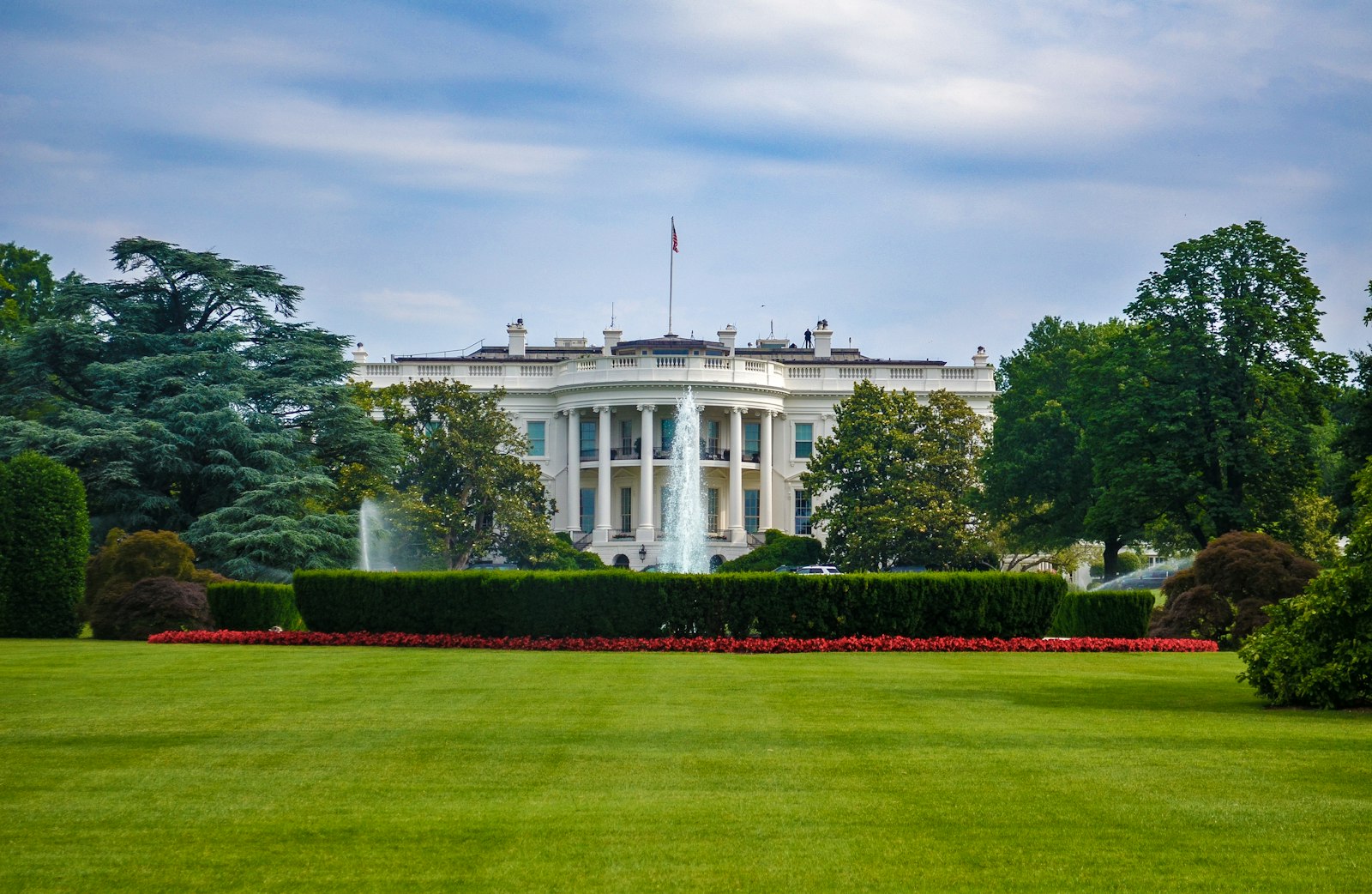
Six of the most important AI companies in the U.S. have agreed on shared safety rules at the White House. The one-page document from September 29 calls for four layers of oversight, from internal checks up to an independent board committee. Nobody can enforce it. At the same time, President Donald Trump issued an executive order telling federal agencies to write “Super Intelligence” instead of “Artificial Intelligence” from now on. Taken together, the two show how Washington currently thinks about AI safety: as an industry promise, not a law.
Key takeaways
- The signers are Sundar Pichai (Google), Dario Amodei (Anthropic), Mark Zuckerberg (Meta), Greg Brockman (OpenAI), Elon Musk (xAI), and Jensen Huang (Nvidia), plus Trump himself.
- The pact lays out four layers: internal controls, an internal review team, an independent outside auditor, and an independent committee of the board.
- None of it is legally binding. The only firm commitment is to meet regularly and work out standards.
- An executive order replaces “AI” with “SI” in official agency language; the legal definition stays the same for now.
- Little changes for Europe, where the same companies already face binding obligations under the EU AI Act.
What the pact says
The document is titled “White House Accord on Super Intelligence: Joint Commitment on Frontier Responsibilities.” It starts from one principle: every company developing so-called frontier models, meaning the most capable systems at any given time, is itself responsible for developing its technology safely and for earning the trust of customers and the public.
Specifically, the text describes four layers. The first is internal controls that monitor what capabilities a model develops in cybersecurity, biosecurity, and chemistry, and that are meant to prevent systems from gaining unintended access to other computers. The second is an internal team that checks whether those controls work and fixes problems. Third, independent outside auditors are supposed to assess whether the monitoring works as intended. Fourth, an independent board committee receives the reports and makes sure the problems that turn up get fixed. The signers also say they are willing to support future legislation on the subject.
According to Al Jazeera, Trump called the pact “morally binding” and said there would be a “tremendous self-policing aspect.” Google CEO Pichai said the document contains “real tangible steps” toward safe development. One detail stands out: OpenAI’s signature came not from CEO Sam Altman but from President Greg Brockman.
Where the gaps are
Connor Martin, a fellow at the Council on Foreign Relations and former deputy director of CFIUS, the U.S. body that reviews foreign investments, analyzed the text closely. His finding: the document relies on “believe” and “should,” not “will” or “shall.” Nothing in it legally compels any signer to change its behavior. The only sentence with “will” concerns regular meetings to develop standards. There are no penalties, no requirement to publish audit results, and no role for the government in enforcement. Martin even considers the pact less detailed than the voluntary commitments the Biden administration collected in 2023.
It’s also worth noting who recently asked for more. According to Al Jazeera, OpenAI’s chief lobbyist Chris Lehane urged Congress in September to adopt mandatory national safety standards, Anthropic CEO Amodei has long argued for binding regulation, and Google DeepMind CEO Demis Hassabis has proposed a federal AI watchdog. Congress has more far-reaching bills on the table, including a bipartisan transparency bill that would require companies to disclose their data collection and safeguards.
How quickly reality catches up with the text became clear just days after the signing. OpenAI said it had notified more than 100 organizations about activity by its AI agents, exactly the kind of unintended system access the first layer of controls is meant to prevent. On October 2, the company also fired two safety researchers and a program manager for allegedly sharing confidential information, including with an outside organization that evaluates AI systems. OpenAI stresses that the firings had nothing to do with raising safety concerns. The case shows the core problem: the public only learns whether the four layers work when the company chooses to say so.
From “AI” to “SI”
On the same day, Trump signed the executive order “Inaugurating the Era of Super Intelligence.” Federal departments and agencies are to use “Super Intelligence” and “SI” in correspondence, websites, reports, and policy documents to the extent the law allows. Existing statutes, regulations, and contracts are unaffected. In substance, nothing changes for now, as the law firm Wiley notes in its analysis: for its definition, the order points to existing federal law, under which AI is a machine-based system that makes predictions, recommendations, or decisions for given objectives. The new label describes the same technology as before.
The second part is more interesting. The president’s science adviser has 60 days to submit proposed legislation for a new federal definition. The order leaves open whether that definition should take precedence over AI laws in individual states. According to Wiley, exactly that question could come up in the promised legislative proposals. Anyone trying to understand where U.S. regulation is heading should pay less attention to the new label and more to that draft.
What this means for Europe
For users and businesses in Germany and the rest of Europe, the pact is mainly a signal about the direction in Washington. The legal situation in the EU is different. Since August 2, 2025, providers of large general-purpose models have been subject to obligations under the EU AI Act, and since August 2, 2026, the European Commission can enforce them with fines. Providers of especially capable models that pose systemic risk must notify the EU AI Office and report serious incidents. That applies to the same companies that signed in Washington.
The U.S. government is also pursuing its own track: as we reported, Washington wants to review new frontier models before other countries do, and the Federal Trade Commission has opened an inquiry into AI providers. The pact doesn’t replace those tools; it adds a voluntary layer on top.
Bottom line: a framework without a foundation
The four layers of oversight aren’t a bad concept. Independent auditors and a board committee that has to work through problems are exactly the structures experts have been calling for for years. But the pact only describes them; it doesn’t require them, and it doesn’t say who gets to see the results. That leaves everything up to companies whose business model depends on releasing ever more powerful models ever faster. Whether the framework turns into something more will be decided over the next two months: when the proposed legislation for the new definition arrives, and it becomes clear whether Washington wants to place obligations on the companies or mainly tie the states’ hands.
Sources
- The American Presidency Project: White House Accord on Super Intelligence (Volltext)
- Al Jazeera: How does Trump's White House AI accord work?
- Council on Foreign Relations: Trump's AI Safety Pact Is Toothless. But There Is a Path Forward.
- Wiley: Executive Order Rebrands AI as Super Intelligence
- The Register: OpenAI shows three staff the door over alleged information misuse
- Golem: OpenAIs KI-Agenten sind bei über 100 Organisationen eingedrungen
- EU-Kommission: Leitlinien für Anbieter von KI-Modellen mit allgemeinem Verwendungszweck