

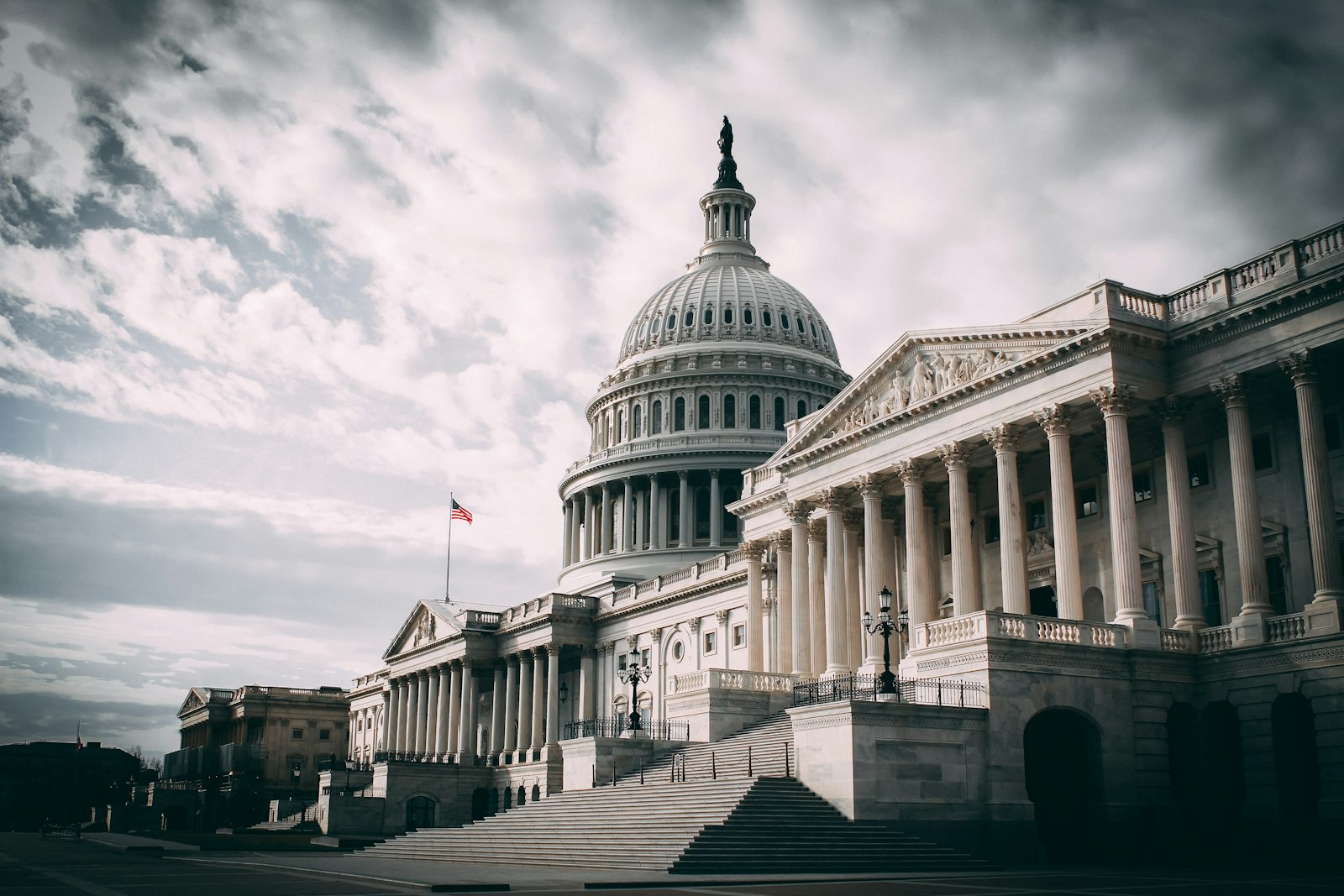
Washington saw an unusual political alignment this week: democratic socialist Bernie Sanders and MAGA architect Steve Bannon jointly called for stricter government limits on artificial intelligence at a conference. Almost simultaneously, OpenAI backed a specific federal AI safety bill for the first time, the FRONTIER Act. The White House has little patience for either move: President Trump calls the concerns a “hoax.”
Key takeaways
- At the “Pro-Human Assembly” in Washington, Bernie Sanders and Steve Bannon jointly called for stricter AI limits alongside church leaders, labor unions, and families of victims.
- OpenAI backed a specific federal AI safety bill for the first time: the FRONTIER Act, which would require large AI developers to undergo independent audits.
- There’s no agreement on the approach: Sanders wants a legislated moratorium on data centers, while Bannon wants an executive order instead of legislation.
- President Trump calls the concerns a “hoax” and instead threatens AI executives with lawsuits over harm caused by their systems.
- The FRONTIER Act, introduced in July 2026, has five co-sponsors from both parties and currently sits with two House committees.
An unusual coalition in Washington
In a series of speeches at the “Pro-Human Assembly,” organized by the Future of Life Institute, Sanders and Bannon called for stricter limits on artificial intelligence. “When you’re racing toward a cliff, you hit the brakes,” Sanders said, according to a New York Times report. He described the moment as “a dangerous and unprecedented moment in world history.” The conference drew several hundred attendees and brought together an unusual coalition of Republicans and Democrats, evangelical, Mormon, and Catholic representatives, and artists — attendees were handed hats reading “Keep the future human.”
Democratic Rep. Greg Casar called for banning AI systems “too powerful for humans to control.” His fellow Democrat Lori Trahan said she could hardly believe she had to say it out loud at all — the future everyone wants is a human one. The Archbishop of San Francisco warned that people must be “the masters of AI,” while actress Ashley Judd spoke on behalf of the SAG-AFTRA union about AI-generated abuse imagery, and parents took the stage whose children had died by suicide after chatbot relationships.
What the FRONTIER Act actually requires
While the conference raised more radical demands, a considerably narrower bill is moving through Congress: the FRONTIER Act, introduced in July 2026 by Jay Obernolte (R-CA) and Lori Trahan (D-MA), now with five additional co-sponsors from both parties. The bill would create the first federal framework for AI safety, requiring leading developers to publish “model cards” describing how their systems are built and intended to be used, maintain risk-management frameworks, report safety-critical incidents, and undergo regular audits by independent verification organizations (IVOs). The requirements only apply above certain revenue and compute thresholds.
OpenAI’s chief global affairs officer, Chris Lehane, said at a meeting with lawmakers in Washington that the company specifically supports the bill’s independent-verification-organization provision. It marks the first time OpenAI has backed a concrete federal mandate for external safety auditors — previously, the company had only supported a California state law, and CEO Sam Altman had pledged voluntary external audits after Anthropic CEO Dario Amodei publicly pushed for them. OpenAI has explicitly not endorsed the bill in its entirety, a company spokesperson told CBS News.
Trump and the pushback
The White House stands against this mood. Trump has repeatedly called fears about the technology a “hoax” and wrote on Truth Social that AI and data centers would be “the greatest economic growth engine in history” — bigger than oil, gold, diamonds, or the internet. Rather than new rules, he threatens AI executives with lawsuits should their systems cause harm. Opponents of federal regulation also point to the race with China, arguing the U.S. shouldn’t slow itself down in the AI competition.
The political push comes at a moment when the industry itself is divided over how seriously to take its own warnings. Just days earlier, Altman, Amodei, and other lab leaders had openly discussed a joint pace limit on AI development — critics called it an attempt to use an informal agreement to slow down exactly the competition these companies publicly warn about.
Bottom line
The fact that Sanders and Bannon shared a stage in Washington is itself a political signal: the cost of inaction on AI regulation is rising for lawmakers on both sides. But there’s still no agreement on the path forward — a legislated data-center moratorium, an executive order, and the considerably more moderate FRONTIER Act are worlds apart. OpenAI’s support for a single audit provision is calculated: it signals a willingness to cooperate without committing the company to a bill with an uncertain outcome. Whether the FRONTIER Act even clears its two House committees won’t be decided at a conference, but by whether the White House keeps holding the line against it.