

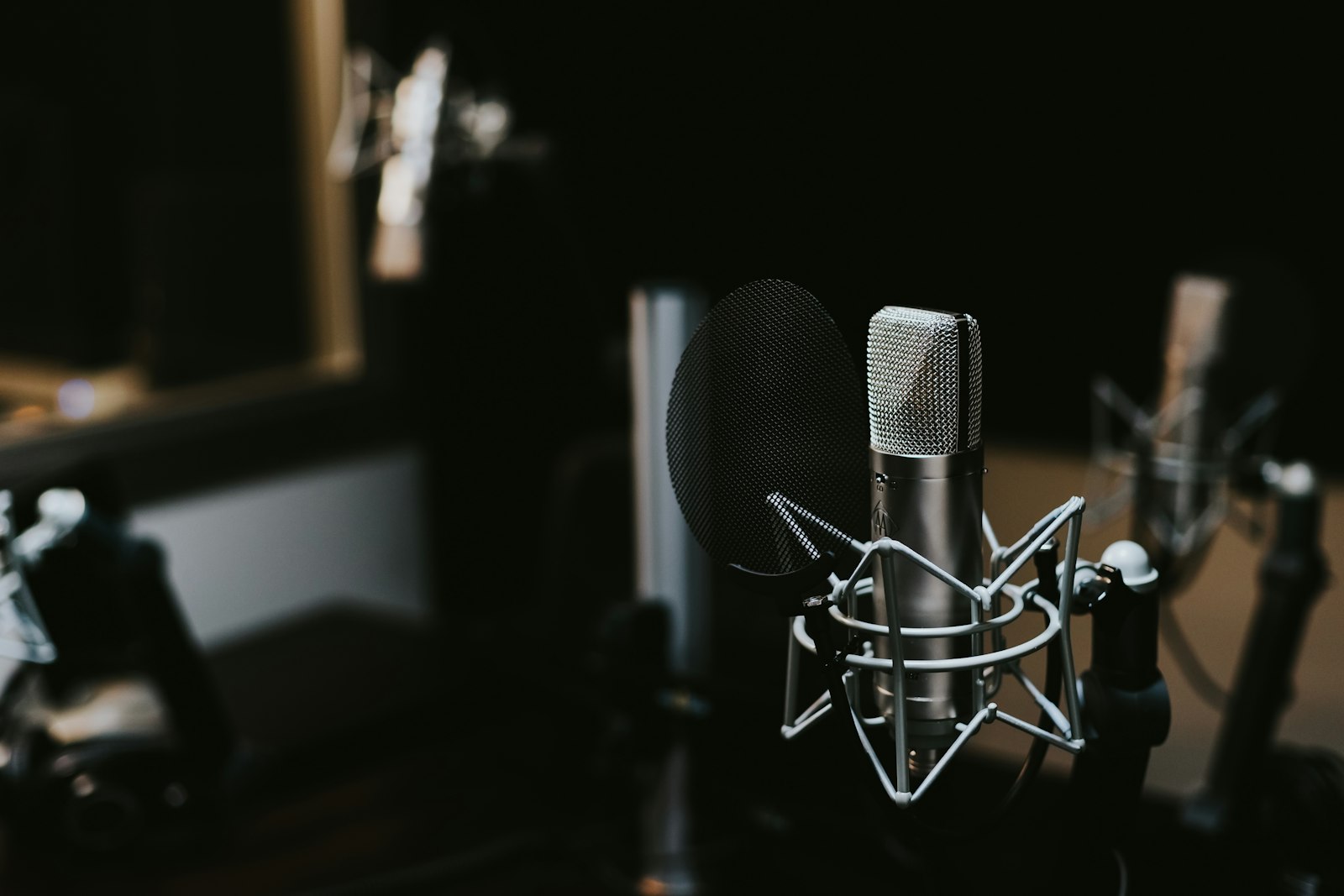
A synthetic narrator can pronounce every word correctly and still miss the meaning of a sentence. With its new Eleven v4 speech model, ElevenLabs aims to narrow that gap: it says the system better infers pauses, emotion, and exchanges between characters from context. For audiobooks, videos, and voice assistants, that matters more than a merely smoother computer voice.
Key takeaways
- ElevenLabs has introduced Eleven v4 and the faster Eleven v4 Turbo. The company says both are available in its creative and agent products and through its API.
- Directions embedded in a script can guide whispering, laughter, or a particular mood; voices are also supposed to stay more consistent across longer productions.
- Turbo targets real-time dialogue. ElevenLabs’ figure of 150 milliseconds to the first audible sound comes from the company, not an independent field test.
- Anyone publishing narrated content still needs to check pronunciation, delivery, usage rights, and consent for cloned voices.
What has changed in the voice
The challenge in text-to-speech is more than reading a sentence without errors. The same words can express a warning, comfort, or irony. ElevenLabs describes a new architecture for Eleven v4 that pays closer attention to tone, pace, and the context of a scene. A character should respond to what was just said instead of sounding like an independently generated audio clip. For now, that is the vendor’s performance claim. Whether it works for a particular voice and language requires listening to your own comparison.
Editors can direct delivery inside the script. Short instructions in square brackets appear where the voice should change. The documentation lists whispering, laughing, and sighing, and sound effects are possible too. That could reduce editing work on a podcast with several roles. It is not a precise editing command, however: a tag can occasionally be interpreted as a sound effect instead of a direction to the speaker. Anyone who needs a dependable production process should listen to several versions of important passages.
For longer work, ElevenLabs promises more stable voices across sections and regenerated lines. That particularly matters in audiobooks: a noticeable change in voice color after a corrected sentence is more distracting than a minor issue in a short ad. According to the model documentation, Eleven v4 handles up to 10,000 characters per request. A full book therefore remains a project made of many sections. The company says stitching these sections together works better now; that does not guarantee identical sound throughout.
Turbo aims to make conversations flow
The second variant, Eleven v4 Turbo, is designed for voice agents and other applications in which a person waits for a spoken reply. In its own comparison, ElevenLabs puts the median time to the first audible sound at about 150 milliseconds. Elsewhere, the company cites roughly 100 milliseconds of inference latency alone. Those are different measurements and should not be collapsed into a single speed figure. A complete reply still takes time for speech recognition, the language model, the connection, and audio playback.
What matters to users is the flow of the conversation rather than one millisecond figure. Can they interrupt? Does the voice start promptly without misplacing emphasis? Does it remain clear during follow-up questions? ElevenLabs pairs Turbo with its ElevenAgents platform. Developers using other components also need to measure the latency of their entire chain. The faster variant is therefore not automatically the better choice: for an explanatory video, sound quality may matter more than how quickly playback begins.
How to try v4 usefully
Existing ElevenLabs users can first generate the same short text with a familiar voice in v4 and in an older model. Difficult passages are most revealing: a name with unusual pronunciation, a calm sentence after an emotional exchange, and a line corrected after the first recording. Only then is it worth trying a longer piece split into sections. The selected voice strongly affects the result; changing models alone cannot turn every source voice into a convincing narrator.
According to ElevenLabs, v4 and Turbo support more than 90 languages. A cloned voice is supposed to retain the speaker’s identity while adapting its accent to the target language. That is useful for multilingual explainers and dubbing, but a native speaker should check the result. A fluent sentence can still stress a name incorrectly or shift the emotional meaning of a statement. Professional voice clones also require consent and clearly agreed usage rights. The model improves a tool; it does not replace editorial review.
The contrast with open speech data is also instructive. The recently released YODAS v3 speech-audio dataset supports research on recognition and multilingual processing. Eleven v4, by contrast, is a finished commercial service for generating spoken output. Both developments touch the same media workflow, but answer different questions: how systems understand speech and how convincingly they speak themselves.
What remains after the announcement
With v4, ElevenLabs offers concrete new tools for directing performances, producing longer work, and running fast conversations. The independent Speech Arena from Artificial Analysis provides a framework for comparing listener preferences, but a general ranking says little about whether your own voice, language, and text type will work. The practical next step is a controlled comparison with the same script. If v4 requires fewer corrections and gives a more fitting performance, the improvement is tangible in daily work. If it does not, staying with the older model is the sensible choice.